
Earls Barton Pharmacy | Information checked 21 October 2026 | NHS eligibility described here applies to England.
Shingles can cause a painful, blistering rash and sometimes nerve pain that continues long after the rash has healed. Vaccination helps reduce the risk of shingles and its complications.
Whether you can have the shingles vaccine free on the NHS depends on your age, when you turned 65, your immune system and your previous vaccination history. This guide explains the rules, private vaccination options at Earls Barton Pharmacy and the emerging research into dementia.
Who can get the shingles vaccine on the NHS
The main eligible groups in England are:
- Adults who turned 65 on or after 1 September 2023.
- Adults aged 70 to 79 who have not already received shingles vaccination.
- Adults aged 18 and over with severe immunosuppression who meet NHS criteria. This expanded eligibility began on 1 September 2025, with no upper age limit.
People qualifying through the routine age programme can start vaccination until their 80th birthday. If they receive their first dose before turning 80, they can receive their second dose before their 81st birthday. Previous shingles vaccination may affect eligibility, so ask your GP surgery to check your record. [1, 2]
Your GP surgery should invite you when you qualify. Contact the surgery if you think you are eligible but have not received an invitation.
Why some people need to wait until age 70
If you turned 65 before 1 September 2023 and are still under 70, you generally need to wait until your 70th birthday, unless you qualify because of severe immunosuppression. This explains why someone younger than you may already qualify.
Healthy adults aged 50 to 64 are not currently included in the routine NHS programme. The planned rollout will add people turning 60 from September 2028, alongside those turning 65, with routine vaccination at 60 from September 2033. [2]
Adults aged 80 and over with a healthy immune system cannot normally start an NHS course. The second-dose exception above still applies. JCVI advised extending vaccination to adults aged 80 and over in November 2024, but that extension is not part of the current routine offer. [1, 3]
Can you get the shingles vaccine privately
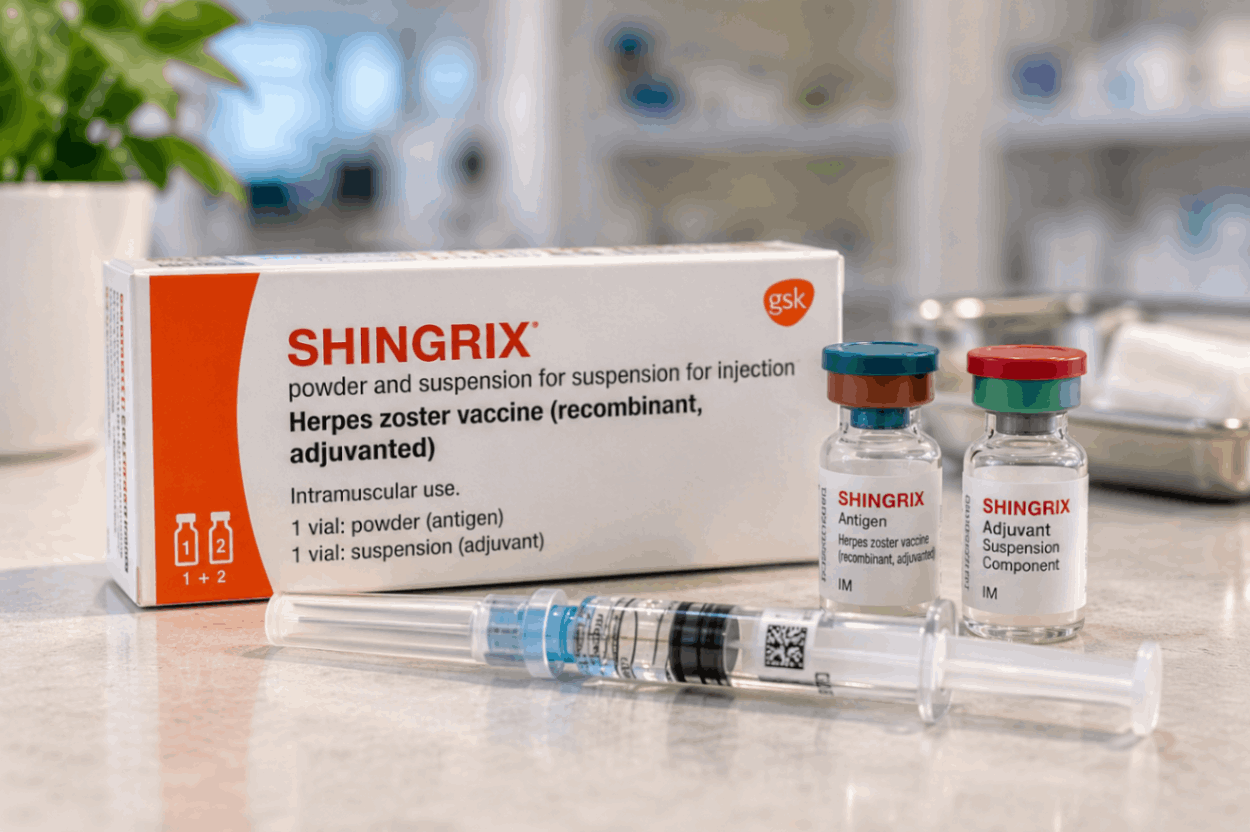
Yes. Shingrix is licensed for adults aged 50 and over, and adults aged 18 and over who are at increased risk of shingles. Private vaccination may therefore be an option even if you do not currently qualify for the NHS programme. [4]
At Earls Barton Pharmacy, we assess your medical history, medicines and previous vaccinations before confirming whether our private service is suitable. This includes checking whether you could receive vaccination free through your GP surgery.
Private vaccination may suit adults in their 50s or early 60s, people waiting to become eligible at 70, or adults aged 80 and over who want to discuss protection. Eligibility for our service depends on an individual assessment.
Considering Private Shingles Vaccination?
Not eligible for the NHS shingles vaccine yet? Our friendly team at Earls Barton Pharmacy can assess your suitability, explain your options and help you understand whether private vaccination is right for you.
How much does private shingles vaccination cost
At Earls Barton Pharmacy, the shingles vaccine costs £225 per dose, or £450 for the two-dose course, at the time of writing. Please confirm the current price and availability before booking.
When comparing providers, check whether the advertised price covers one dose or the full course and whether any consultation fees are additional. Some providers may offer course discounts.
How many doses do you need and when
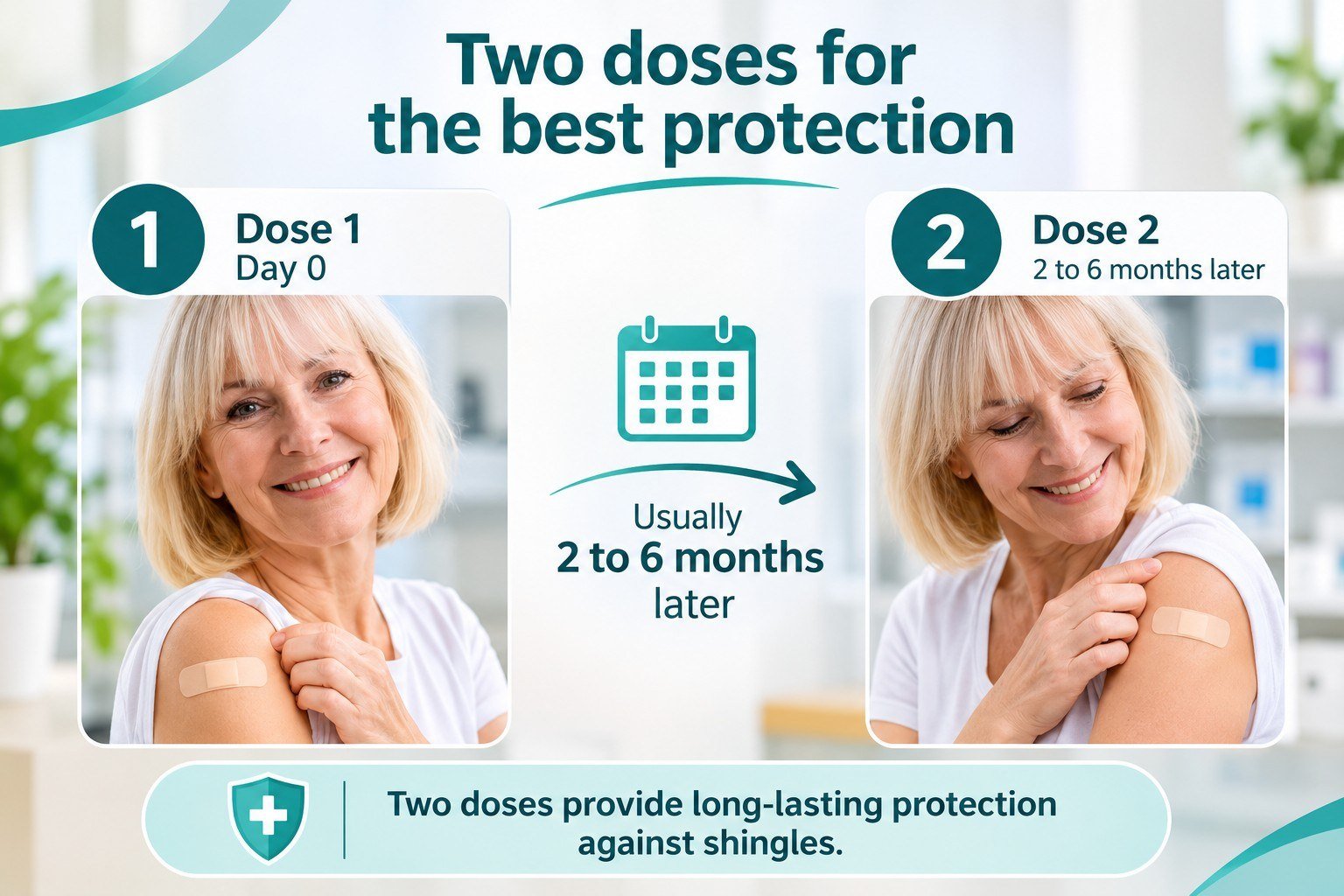
Shingrix is a non-live vaccine given by injection into the upper arm. Two doses are needed for the best long-term protection.
For NHS patients with a healthy immune system, the usual interval is 6 to 12 months. For severely immunosuppressed patients, it is 8 weeks to 6 months, with earlier completion encouraged. UKHSA also permits a second dose from 8 weeks for immunocompetent patients where appropriate under local guidance. [2]
For private vaccination, the usual licensed schedule is two doses two months apart, with flexibility to give the second dose between two and six months after the first. A shorter licensed schedule can apply to some immunosuppressed patients. Your clinician will confirm the appropriate timing. [4]
If the second dose is delayed, the course does not normally need restarting. Arrange to complete it as soon as appropriate, checking NHS age limits where relevant. [2]
What side effects can you expect
Common side effects include pain, redness or swelling at the injection site, tiredness, headache, muscle aches and fever. They usually settle within two to three days. Your pharmacist will explain what to expect and when to seek advice. [4]
Tell the clinician if you have had a serious allergic reaction to a vaccine or its ingredients. Vaccination may need to be postponed if you are acutely unwell.
Could the shingles vaccine help delay dementia
Research suggests shingles vaccination may have an additional benefit for brain health, although it is too early to promise that it will prevent or delay dementia for an individual.
A 2024 study published in Nature Medicine found that Shingrix was associated with a later dementia diagnosis compared with the older live shingles vaccine. Over six years, the researchers reported 17% more time without a dementia diagnosis, equivalent to 164 additional days among people who were subsequently diagnosed. This was an observational study and could not establish that vaccination caused the difference. [5]
A separate study published in Nature in 2025 used the age cutoff in the Welsh vaccination programme as a natural experiment. It estimated that receiving the older vaccine, Zostavax, reduced the probability of a new dementia diagnosis over seven years by 3.5 percentage points, equivalent to a 20% relative reduction. This figure relates to Zostavax and should not be presented as a proven benefit of Shingrix. [6]
These findings are encouraging, but further research is needed to confirm the size and duration of any benefit from Shingrix. The established reason for vaccination remains protection against shingles and its associated nerve pain. Shingrix is not licensed to prevent or treat dementia. [4–6]
A shingles rash needs assessment rather than vaccination
The vaccine prevents shingles; it does not treat an existing episode. If you develop a painful, blistering rash, seek advice promptly. Antiviral medicines work best when started within 72 hours of the rash appearing, but assessment is still worthwhile if longer has passed.
Adults aged 18 and over can have suspected shingles assessed through NHS Pharmacy First. A pharmacist may supply antiviral treatment if the clinical criteria are met, or refer you for further care. A GP referral is not needed to access the service. [7]
If the rash affects your eye or nose, you have eye pain or a change in vision, or you have a weakened immune system, seek urgent medical advice through your GP or NHS 111.
You can be vaccinated after having shingles. Wait until the acute illness has resolved and discuss the appropriate timing with your pharmacist or GP.
FAQ
As of October 2026, someone aged 67 will have turned 65 after 1 September 2023 and meets the routine age criterion. Previous vaccination history still needs checking.
Private vaccination may be suitable after assessment. On the NHS, severely immunosuppressed adults have no upper age limit. Other adults can complete a course before their 81st birthday if the first dose was given before they turned 80.
Yes. A previous episode does not mean you are permanently protected. Vaccination may still be appropriate after recovery.
Earls Barton Pharmacy offers private shingles vaccination following a suitability assessment. For the routine NHS programme, contact your GP surgery.
People in this age range who turned 65 before 1 September 2023 generally need to wait until 70, unless they qualify through severe immunosuppression.
If you received Zostavax through the routine NHS programme aged 70 to 79 and remain immunocompetent, you are not currently offered Shingrix routinely. If you are now severely immunosuppressed, or received Zostavax privately before becoming eligible, ask your GP to review whether you qualify for Shingrix. [2]
No. Research suggests a possible benefit, but it does not establish guaranteed protection. The vaccine is offered to prevent shingles and its complications.
Book Your Shingles Vaccination at Earls Barton Pharmacy
Would you like to discuss shingles protection? Our friendly team can check your suitability, explain the two-dose vaccination course and advise whether you may qualify for a free NHS vaccination through your GP surgery.
References
- NHS – Shingles vaccine
- UKHSA – Shingles immunisation programme guidance for healthcare practitioners
- JCVI – Statement on the shingles vaccination programme, November 2024
- Shingrix – Summary of Product Characteristics
- Taquet et al. – Nature Medicine (2024)
- Eyting et al. – Nature (2025)
- NHS England – Pharmacy First
Disclaimer: All information in this article has been checked for accuracy at the time of publication. However, we cannot guarantee that it is entirely free from errors or omissions and accept no liability for any inaccuracies or omissions. This information is intended for general guidance only and should not replace professional medical advice.


